








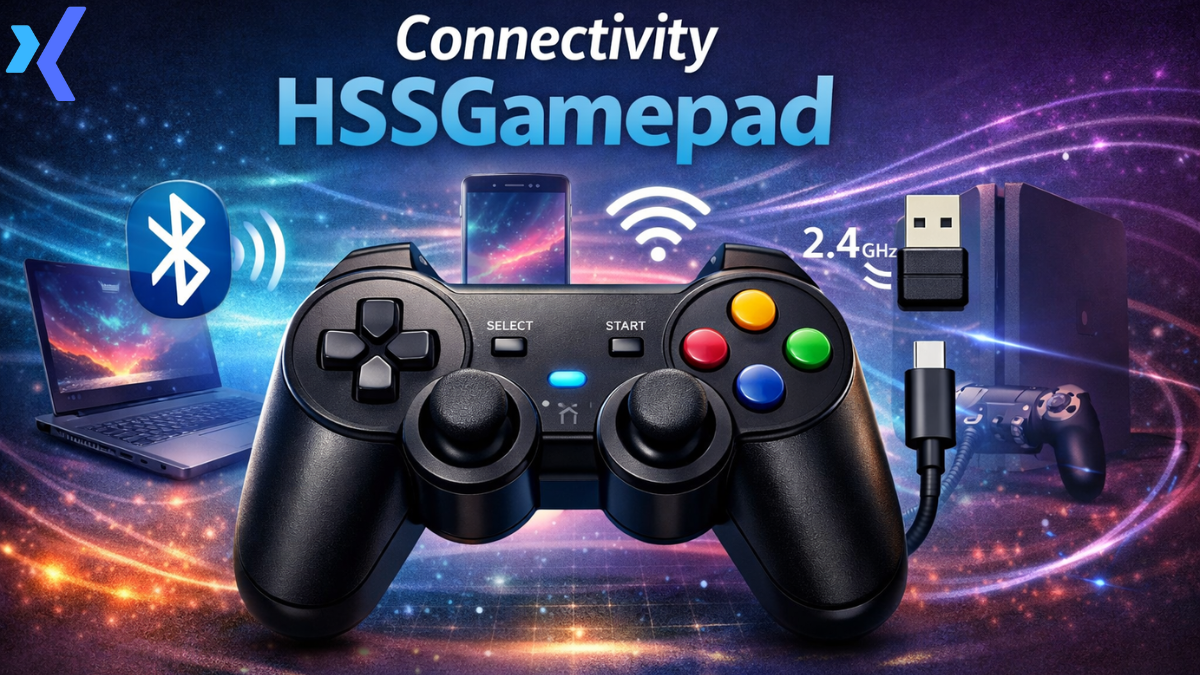
Gaming today is not what it was ten years ago. Players switch between Android phones, Windows PCs, Smart TVs, and tablets — sometimes all in the same week. That kind of lifestyle demands a controller that keeps up. And that’s exactly where connectivity HSSGamepad comes in.
The HSSGamepad is a multi-platform game controller built around one core idea: reliable connection across every device you own. Whether you are pairing it via Bluetooth 5.0, plugging in a USB-C cable, or using a 2.4GHz wireless dongle, the experience is designed to be fast, stable, and genuinely frustration-free. This guide breaks down every part of how connectivity HSSGamepad works — from how to set it up the right way to fixing the issues most people silently suffer through.
The Future of Connectivity HSSGamepad
The direction gaming hardware is heading makes controllers like the HSSGamepad increasingly relevant. Cloud gaming is growing fast — services like Xbox Cloud Gaming, NVIDIA GeForce NOW, and Amazon Luna let players stream titles without expensive hardware. All of these services work with standard controllers, and a portable, multi-platform gamepad like the HSSGamepad is perfectly suited for that kind of setup.
There are also credible hints from the HSS development team about upcoming integrations. These include features like adaptive frequency hopping to reduce interference in crowded wireless environments, smarter multi-device memory that lets the controller switch between paired devices faster, and potential developer SDK releases that would allow game studios to build tighter native integrations with the controller’s input system. Whether all of these materialize on the current hardware or future iterations remains to be seen, but the roadmap suggests that connectivity HSSGamepad is being developed as a platform, not just a product.
The broader shift toward hybrid gaming setups — where the same person plays on PC in the morning, a phone on the commute, and a Smart TV at home in the evening — makes a versatile, reliably connected controller less of a nice-to-have and more of a genuine necessity. The HSSGamepad is built for exactly that kind of modern gaming life.
What Is the HSSGamepad and Why Does Connectivity Matter So Much
The HSSGamepad is a game controller designed for gamers who play across multiple platforms and do not want to buy a separate controller for each one. It connects to PCs, Android devices, Smart TVs, and select consoles like the Nintendo Switch. The design is ergonomic, the build is solid, and the feature list skips the bloat while nailing the essentials.
But let’s be honest — the hardware is only half the story. Connectivity is what makes or breaks any controller. You could have the most comfortable grip, the sharpest buttons, and the longest battery life, and none of it would matter if your controller lags by even 100 milliseconds during a ranked match. In competitive gaming, that gap between pressing a button and seeing it respond on screen is the difference between a clean headshot and a frustrating death screen. Connectivity HSSGamepad is built with this reality in mind, which is why it offers three distinct connection methods rather than forcing users into a single option.
The Three Connection Modes Explained
Understanding the three connection modes is the foundation of getting the most out of your HSSGamepad. Each one serves a different purpose, and knowing when to use which one can seriously upgrade your gaming experience.
Bluetooth 5.0 is the most convenient option for casual gaming and device-switching. You pair it once, your device remembers it, and you connect automatically on every session after that. It works with phones, tablets, laptops, and even Smart TVs that support controller input. The trade-off is that Bluetooth shares bandwidth with other wireless devices in your environment — your headphones, your keyboard, your neighbor’s router — which can introduce occasional latency or brief signal drops in crowded spaces.
The 2.4GHz wireless dongle is the sweet spot for anyone who wants wireless freedom without the interference drawbacks of Bluetooth. You plug the small USB dongle into your PC or console, press the sync button on the controller, and you are connected. The signal goes directly between the dongle and the controller, no bandwidth sharing, no protocol overhead. What most people do not know is that the 2.4GHz mode actually uses less power during active gameplay than Bluetooth does, because it is not constantly scanning for other devices in the background.
USB-C wired mode is the gold standard for performance. Zero input delay. Zero battery anxiety. Zero chance of a wireless dropout at a critical moment. Plug the cable in, and the controller is recognized almost instantly by any modern operating system. It is the mode competitive gamers and tournament players default to because there is simply nothing more reliable. It also doubles as the recommended method for firmware updates, since a stable data connection reduces the risk of the update failing mid-process.
Key Features of Connectivity HSSGamepad at a Glance
Here is a quick breakdown of what the HSSGamepad brings to the table:
| Feature | Details |
| Connection Types | Bluetooth 5.0, 2.4GHz dongle, USB-C wired |
| Platform Support | PC (Windows), Android, Smart TV, Nintendo Switch |
| Battery Life | Up to 15 hours on a full charge |
| Charging Port | USB-C |
| Wireless Range | Up to 10 meters (Bluetooth), up to 8 meters (2.4GHz) |
| Latency (Wired) | Near zero |
| Latency (2.4GHz) | Very low, typically under 10ms |
| Latency (Bluetooth) | Low to moderate depending on environment |
| Button Layout | Standard dual-stick, D-pad, trigger + bumper setup |
| Weight | Lightweight, ergonomic anti-slip grip |
The table above paints a clear picture. Connectivity HSSGamepad is not trying to be the most feature-heavy controller on the market. It is trying to be the most reliable one across the widest range of devices — and for a large portion of gamers, that is exactly what they need.
How to Set Up Connectivity HSSGamepad on Different Devices
Setting up the HSSGamepad correctly from the start saves you a lot of headaches later. Here is how to get connected on each major platform.
Windows PC Setup
For wired connection, plug the USB-C cable into both the controller and your PC. Windows should recognize it automatically as a standard gamepad, no driver installation needed in most cases. If it does not show up, check Device Manager and verify that your USB drivers are current.
For 2.4GHz mode, insert the wireless dongle into an open USB-A port. Press the Home button on the controller, then press the Sync button. The LED on the dongle and the controller will flash briefly, then go solid — that solid light means you are connected. From this point forward, the connection is automatic every time you power on the controller within range.
Android Setup
Turn on Bluetooth on your Android device through Settings. On the HSSGamepad, hold the Bluetooth pairing button until the LED begins flashing. Find the controller in your device’s Bluetooth menu and tap to pair. Once connected, the LED becomes steady. Most Android games with controller support will recognize it immediately. For games that do not natively support controllers, third-party mapping apps can bridge the gap.
Smart TV Setup
Smart TVs vary widely in how they handle controller pairing, but most modern ones with Android TV or Google TV support Bluetooth gamepads directly. Navigate to your TV’s Bluetooth settings, put the HSSGamepad into pairing mode, and select it when it appears in the list. Some TVs require you to confirm the connection on-screen. Once paired, the controller hssgamepad connectivity persists across restarts without needing to re-pair.
Nintendo Switch Setup
The Switch can use the HSSGamepad in wired mode through USB-C when the console is docked. Wireless functionality on Switch depends on the specific model variant — check your product documentation to confirm supported modes for your unit.
Why Low Latency Is Non-Negotiable for Modern Gamers
“In competitive gaming, even a small delay can change the outcome of a match. A 100ms lag is invisible to the eye but catastrophic to your reaction time.”
This is not an exaggeration. Human reaction time in gaming typically falls between 150 and 250 milliseconds. If your controller is adding even 50 to 80ms of input lag on top of that through a poor wireless connection, you are effectively playing at a permanent disadvantage compared to someone on a wired setup.
Connectivity HSSGamepad addresses this directly. The 2.4GHz mode is optimized for low-latency transmission, typically delivering input responses under 10 milliseconds. The wired USB-C mode brings that number as close to zero as current hardware allows. Even Bluetooth 5.0 — which is generally the highest-latency option of the three — benefits from improved efficiency over older Bluetooth versions, making casual gaming genuinely smooth.
The practical impact is noticeable. In fast-paced games like shooters, fighting games, or anything with precise timing windows, using the right connection mode in connectivity HSSGamepad can meaningfully improve your performance. It is not magic — but it removes a variable that was actively hurting your game.
Cross-Platform Compatibility: One Controller for Everything
One of the strongest selling points of the HSSGamepad is that it works across the devices you already own. You do not have to choose between a PC controller and a mobile controller — this one handles both.
On PC, it integrates with Steam’s controller settings and works with any game that supports XInput or DirectInput. On Android, it pairs cleanly with games like PUBG Mobile, Call of Duty Mobile, and Genshin Impact. On Smart TVs, it turns streaming services like Xbox Cloud Gaming and NVIDIA GeForce NOW into a proper living-room gaming setup. This kind of flexibility makes connectivity HSSGamepad a genuinely practical purchase for anyone who plays across more than one platform.
The cross-platform nature also means you spend less time fiddling with settings. The HSSGamepad is recognized as a standard input device on most platforms, which means games and apps that support controllers will just work without needing custom configurations. That plug-and-play reliability — across multiple devices — is what separates a good controller from a great one.
Troubleshooting Common Connectivity HSSGamepad Issues
Even well-made hardware runs into problems. Here are the most common connectivity issues with the HSSGamepad and how to actually fix them.
Controller won’t enter pairing mode: This is almost always a battery problem. A controller with low charge will not enter Bluetooth pairing mode regardless of how many times you press the button. Charge the controller to at least 30% and try again.
Bluetooth connection drops frequently: This usually comes down to wireless interference. Other Bluetooth devices, Wi-Fi routers on the 2.4GHz band, and even microwave ovens can disrupt your Bluetooth signal. Switch to 2.4GHz dongle mode if you need more stability, or move your gaming setup away from the primary interference source.
High input lag on Bluetooth: Move closer to your device. Bluetooth performance degrades significantly over distance, even within its nominal range. Also check whether your device has Bluetooth 5.0 support — older versions of Bluetooth introduce more latency. If the game you are playing is timing-sensitive, consider switching to wired mode.
PC does not recognize the controller in wired mode: Try a different USB port. Some USB hubs and older ports have limited power delivery that can prevent recognition. Also try a different USB-C cable — not all USB-C cables carry data, and using a charge-only cable will not work for controller input.
Controller disconnects mid-session: Check your device’s Bluetooth power management settings. On Windows, navigate to Device Manager, find the Bluetooth adapter, and disable the option that allows the computer to turn it off to save power. On Android, check for battery optimization settings that may be interrupting background Bluetooth connections.
How Connectivity HSSGamepad Compares to Other Controllers
The gaming controller market is crowded. You have first-party options from Sony, Microsoft, and Nintendo, and a growing range of third-party controllers at various price points. Here is how connectivity HSSGamepad stacks up on the features that matter most:
| Controller | Wireless Options | Platform Support | Price Range | Wired Mode |
| HSSGamepad | Bluetooth 5.0 + 2.4GHz | PC, Android, TV, Switch | Budget-Mid | USB-C |
| Xbox Controller | Bluetooth | PC, Xbox, Android | Mid | USB-C |
| DualSense (PS5) | Bluetooth | PC, PS5, Android | Premium | USB-C |
| Generic BT Controller | Bluetooth only | PC, Android | Budget | Micro-USB |
| 8BitDo Pro 2 | Bluetooth + 2.4GHz | PC, Switch, Android | Mid-Premium | USB-C |
What stands out here is that connectivity HSSGamepad offers the dual wireless modes (Bluetooth and 2.4GHz) at a price point that undercuts most competitors that offer the same feature set. The 8BitDo Pro 2 is a strong alternative but comes in at a noticeably higher price. For gamers who want that 2.4GHz reliability without spending premium money, the HSSGamepad makes a compelling case.
Battery Life and Charging: What to Expect
The HSSGamepad is rated for up to 15 hours of gameplay on a full charge. In real-world use, you can expect that number to vary based on which connection mode you are using. Wired mode draws power from the connected device, so your battery stays full throughout those sessions.
In 2.4GHz mode, battery drain is moderate — you will typically get 12 to 15 hours. Bluetooth mode is slightly more variable; in a clean environment with minimal interference, you will be close to the 15-hour ceiling, but heavy Bluetooth congestion increases power consumption as the controller works harder to maintain signal.
Charging via USB-C is fast and straightforward. The universal port means you are not hunting for a proprietary cable. Most users report the controller reaching full charge in two to three hours from empty. A helpful habit is to charge it between sessions rather than running it completely flat — lithium batteries generally perform better with regular partial charges than full discharge cycles.
Tips to Get the Best Performance From Your HSSGamepad
Getting good connectivity is one thing. Getting great connectivity takes a few extra steps.
Keep the firmware updated. Manufacturers push firmware updates to improve connection stability, fix pairing bugs, and occasionally unlock new features. Connect via USB-C and check the manufacturer’s site or companion app for the latest version.
Use 2.4GHz mode for anything competitive. Bluetooth is great for casual play, but if you are playing a game where reaction time matters, the dedicated dongle connection is meaningfully faster and more stable. The difference is not always visible in casual play, but in close matches it shows up.
Reduce wireless clutter in your gaming space. Turn off Bluetooth devices you are not using. If you are on a 2.4GHz Wi-Fi network, consider switching your router to 5GHz — that alone frees up significant bandwidth in the 2.4GHz space and reduces interference for both your controller and other devices.
Store the dongle safely. The 2.4GHz dongle is small and easy to lose. Many HSSGamepad units have a small slot in the controller body to store the dongle when not in use. Use it.
Conclusion
Connectivity HSSGamepad is more than a controller with multiple wireless modes. It represents a practical, well-thought-out answer to how most people actually game today — across devices, across settings, and without wanting to manage three different controllers for three different screens.
The three-mode connection system gives you real flexibility. Wired USB-C for maximum precision. 2.4GHz dongle for wireless speed. Bluetooth for convenience and portability. Combined with solid cross-platform support, a reasonable battery life, and a build quality that punches above its price range, the HSSGamepad earns its reputation.
If you have been frustrated by input lag, random dropouts, or controllers that just do not work properly across your devices, connectivity HSSGamepad is worth a serious look. Set it up right, use the right mode for the right situation, and you will spend far less time fighting your hardware and far more time actually enjoying your game.
Frequently Asked Questions
What does connectivity HSSGamepad actually mean?
Connectivity HSSGamepad refers to the full system of methods the HSSGamepad uses to communicate with gaming devices. This includes Bluetooth 5.0 for wireless pairing, a 2.4GHz USB dongle for low-latency wireless play, and USB-C for wired connection. The term broadly covers how the controller sends input data to your PC, phone, TV, or console — and how well it does so without lag, dropout, or interference issues.
Which connection mode is best for competitive gaming with the HSSGamepad?
For competitive gaming, wired USB-C mode is the most reliable. It delivers the lowest possible input latency and eliminates all wireless variables. If you need wireless, the 2.4GHz dongle is the next best option — it creates a dedicated signal path between the controller and the dongle with minimal interference. Bluetooth is best saved for casual gaming or situations where you cannot use the other two options.
How do I fix connectivity HSSGamepad Bluetooth dropping on Android?
First, check that your phone’s battery optimization is not aggressively managing Bluetooth in the background — some Android skins (like MIUI or One UI) throttle Bluetooth connections to save power. Go to Settings, find Battery Optimization or App Battery Management, and exclude the Bluetooth system process if possible. Also make sure you are within a reasonable range (under 5 meters), and that there are no major interference sources like other active Bluetooth devices or a 2.4GHz Wi-Fi router directly between you and your phone.
Does connectivity HSSGamepad work with cloud gaming platforms?
Yes. The HSSGamepad works with major cloud gaming platforms including Xbox Cloud Gaming, NVIDIA GeForce NOW, and Amazon Luna. These platforms recognize it as a standard input device, which means no special configuration is needed. For the best experience on cloud gaming, use 2.4GHz mode or wired USB-C to minimize local input lag — since cloud gaming already adds some network latency, keeping the controller latency as low as possible matters more here than in local gaming.
How often should I update the firmware on my HSSGamepad?
Check for firmware updates every few months, or immediately if you notice unusual behavior like frequent disconnects, pairing failures, or increased input lag. Firmware updates often patch exactly these kinds of issues. Connect the controller via USB-C, visit the manufacturer’s support page, and follow their update instructions. The process usually takes under five minutes, and a stable wired connection during the update prevents any risk of the process failing partway through.
Can I use connectivity HSSGamepad on multiple devices without re-pairing every time?
In Bluetooth mode, the HSSGamepad can store multiple paired devices in its memory, depending on the firmware version. You can switch between paired devices by holding the Bluetooth button and selecting the desired pairing slot. In 2.4GHz dongle mode, the controller is paired to one specific dongle — but you can own multiple dongles and pair each one to a different device. Wired mode requires no pairing at all, so it works on any device you plug into, instantly.


