


Introduction
When Huawei announced the Y7 Prime 2018, it created genuine excitement among smartphone enthusiasts who had already admired the Huawei P20 and P20 Pro. As someone who follows the budget lineup closely, I found it fascinating how this Chinese smartphone manufacturer continues to evolve while keeping affordability in focus. The company seems to follow the footprints of Samsung, releasing multiple devices in a short time to fill every corner of the market. What stood out most to me was how the design and specs of the Honor 7c and Y7 Prime 2018 are almost identical, yet each phone still holds its own appeal in the budget-oriented market.
The latest phone in the series, being the successor of last year’s Y7 Prime, brings noticeable improvements in both design and performance. As a modern user, I found it to be a better and more refined smartphone than its predecessor, offering just the right balance between functionality and affordability. The review phase was a pleasant surprise—the phone truly stands tall among others in its market segment. From my personal experience, Huawei managed to strike a fine balance between style and practicality, reaffirming its place as a reliable Chinese manufacturer for those seeking value without compromise.
Design and Display
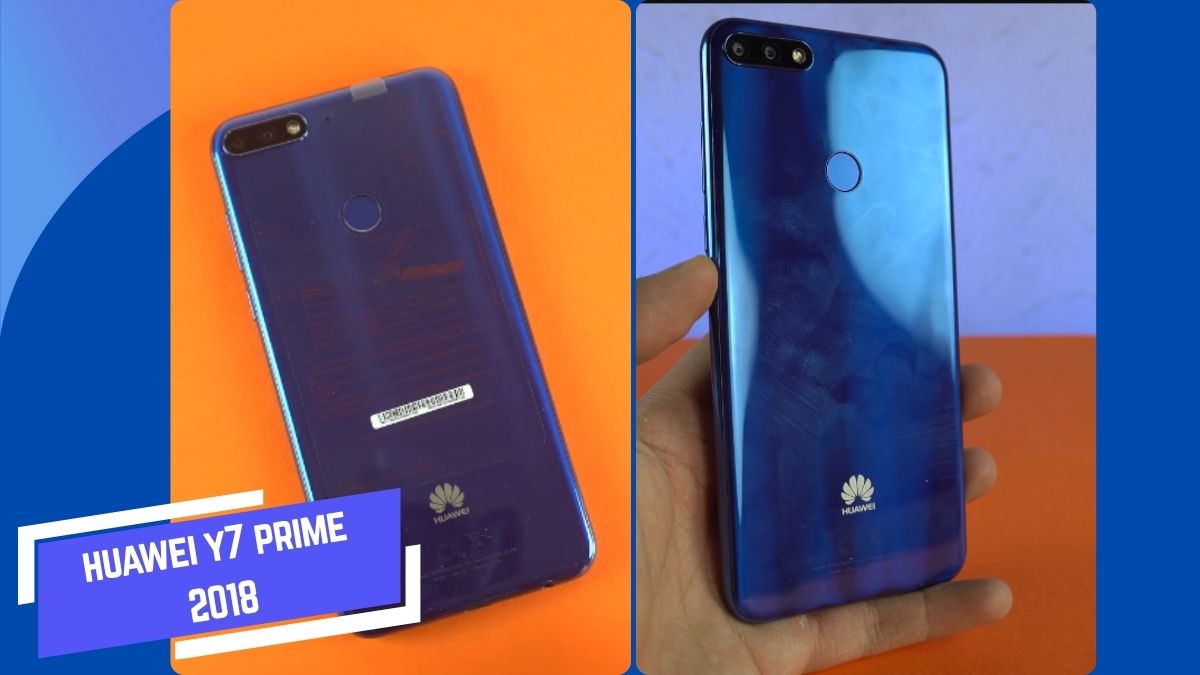
The Huawei Y7 Prime 2018 instantly catches attention with its slimmer bezels and sleek design. When you look at the front of the device, it’s clear that Huawei took inspiration from its last year’s model but made it bigger and bolder. Holding it with one hand can be a bit challenging, but the plastic body framed with aluminum gives it a nice balance of sturdiness and lightness. The glossy finish on the back reminds me of the Honor 9 Lite, a premium phone that also knows how to show off. However, despite its plastic build, this phone still feels stylish enough to turn heads.
On closer inspection, the Fullview display steals the show. With minimum bezels and a 5.99-inch screen offering a 720 x 1440 pixels resolution, the aspect ratio of 18:9 makes watching movies or playing games quite enjoyable. I noticed that the bottom bezel carries the Huawei branding, while the 8MP selfie camera sits neatly in the top left corner. Thanks to its immersive screen, the viewing experience feels larger than life, even with the 269 PPI density, which still manages to deliver a rich viewing experience.
The back of the Huawei Y7 Prime 2018 features a dual-camera setup—a 13 MP and 2 MP combination—with an LED flash positioned near the top left corner. The fingerprint scanner sits in the center, though its placement might feel a bit high if you have smaller hands, forcing you to stretch your finger to reach it. The shiny finish looks great but is prone to smudges and fingerprints, which can make it a bit messy. Thankfully, the back cover provided by Huawei helps keep things clean and provides a firm grip for single-handed use.
In terms of build, the power button and volume rocker are smartly placed on the right-hand side, easily within the thumb’s reach. On the left, you’ll find the SIM tray supporting dual SIM slots and a dedicated micro SD card slot for extra storage. At the bottom, there’s a 3.5 mm headphone jack, micro USB charging port, microphone, and a single speaker grill. The phone weighs only 155 g, which feels not heavy despite its bigger size. The Black, Gold, and Blue colors add a dazzling shine, with the Mirror Effect giving it an eye-catching touch.
Unused Words: thin, infamous notch, loathe, array of tweaks, customizing, bluish tint, color temperature, modifying, liking, eye comfort mode, warm yellowish tint, strain, eyes, feature, handy, extended periods, reading, book, long, downside, lower side, higher resolution, crisp results, viewing angles, tilting, darkening, outdoors, bright enough, direct sunlight, impossible, watch movies, media
OS
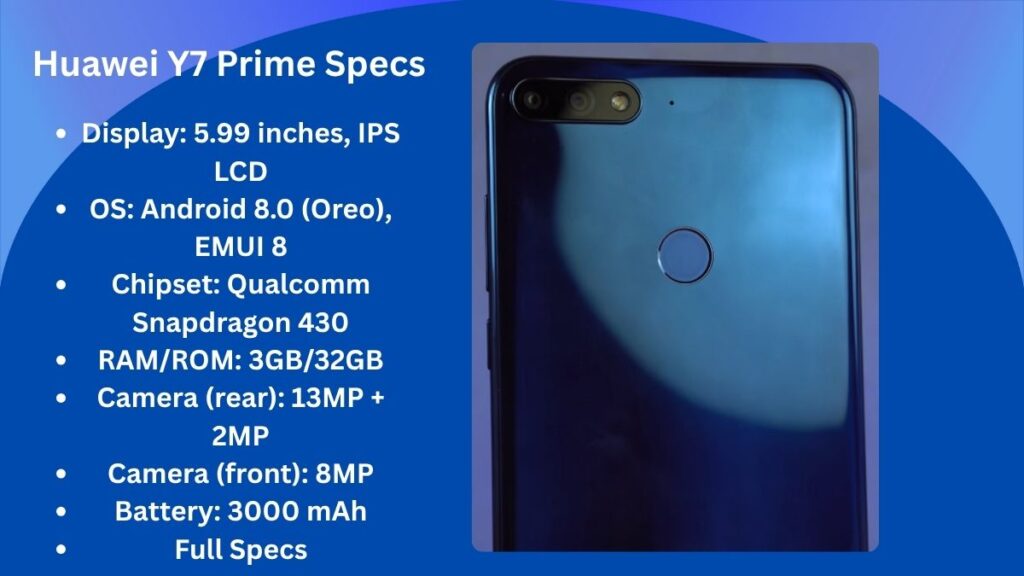
Huawei’s EMUI 8.0 brings a fresh layer on top of Android 8.0, and the all-new EMUI 8.0 includes helpful gestures like three-finger screenshot, double-tap to wake up or turn off screen, and flip phone to mute while ringing — small tricks I found genuinely useful when juggling apps. The app drawer makes the home screen neater, though you may spot some bloatware or preinstalled games that you can remove through settings; Smart Assistance groups many of these shortcuts so you can tailor the phone fast and keep a firm grip on daily use.
On security, features such as file safe (found under Settings>Security & Privacy) create a password-enabled space for private data, and App Lock protects individual apps — both handy for locking phone and keeping data safe. The face unlock uses facial recognition technology to unlock phone and is quite snappy, often recognizes face even in dark conditions, but for stronger protection you can still use PIN or password protection as the primary option; this balance of convenience and safety is one reason the feature is a latest trend and hottest trend in the industry.
Performance & Battery
Everyday Performance Experience
The Huawei Y7 Prime 2018 aims to be a reliable budget performer in Huawei’s lineup, but it can’t quite match the power of flagships like the P20 and P20 Pro. Its processor has been downgraded from the Snapdragon 435 found in its predecessor to a Snapdragon 430, combined with 3GB RAM and 32GB memory. While this 2018 model performs well for casual tasks, it runs on an entry-level SoC, so don’t expect high-end performance. In benchmark tests, it scored 59532 on AnTuTu, with 670 single-core and 2765 multi-core results on GeekBench — enough for smooth day-to-day use, but not for demanding apps.
Real-Life Usage and Gaming
In real-life usage, the phone feels ordinary but stable. For light usage like downloading files, multitasking between social media apps, watching videos on YouTube, or using the camera, it performs without major lags or stutters. However, under heavy usage, such as running maximum apps or playing music in the background, the temperature rises, and the phone starts to heat up. Playing resource-hungry games like Deer Hunter and Real Racing leads to extreme lag, and sometimes the phone even froze and needed to be restarted. Clearly, these specs aren’t ideal for power users or long gaming sessions.
Battery and Charging Performance
When it comes to the battery, Huawei made a surprising downgrade. The older model featured a 4000 mAh battery with a 5.5″ screen, while the Y7 Prime 2018 only includes a 3000 mAh battery despite its increased screen size of 5.99″. Although the SD 430 chip, 720p screen, and LCD panel try to save power, battery drainage becomes evident during simultaneous tasks or media consumption. Charging from 0% to 100% takes around 2 hours 50 minutes using the micro USB port, which feels outdated compared to modern USB Type C options.
Battery Life in Real Use
From my experience, the battery dropped from 100% to 78% after 1 hour of light use like browsing and WiFi connectivity. During heavy gaming and 4G connection, it went from 78% to 64% in just half an hour. Once the device heated up, the battery drained exponentially, reaching 46% after combined moderate usage. The fast battery drain means it won’t last a whole day, making it not fit for heavy users. Still, for youngsters who prioritize media consumption and basic performance, the Huawei Y7 Prime 2018 offers a fair mix of functionality and affordability.
Camera Performance
First Impressions
When I first tried the Huawei Y7 Prime 2018, I was excited to explore its rear camera setup — a 13MP and 2MP dual-lens combination that looked good on paper. But honestly, it felt more like a downgrade than an upgrade from last year’s model. The camera app opens to the main camera screen, where you can swipe left or swipe right for different options like video, panorama, HDR, watermark, and filter.
On the top bar, you’ll find useful tools such as wide aperture mode, beauty mode, flash, and the secondary camera. You can also adjust things like resolution, timer, smile capture, and audio control from the camera settings. Even with all these features, the overall camera quality doesn’t quite live up to expectations.
Real-Life Photography
While testing the camera in outdoor conditions, I noticed the colors were often washed out, and the image lacked sharpness and detail. On zooming in, there’s clear noise, loss, and a lack of sharpness, especially in low light or dark scenes. The wide aperture mode is meant to improve focus and background intensity, but in reality, the blur effect feels imbalanced and inappropriate, and the bokeh effect often turns out unreliable. The software processing is also poor, affecting the softness and color of the subject in the picture.
Beauty Mode & Final Thoughts
The beauty mode smoothens the skin tone, but it looks overly artificial. Using it on the front camera or front cam removes details and makes the eye size appear enlarged and unnatural. Even in ideal conditions like daytime and good light, photos come out looking horrible with little improvement in image quality. Without Pro Photo, Pro Video, Time Lapse, and Slow-mo modes, this budget phone struggles to enhance its photography performance. Overall, the Huawei Y7 Prime 2018 camera is a total disappointment, especially when compared to competitors like the Infinix Note 7 — users might be happier exploring better alternatives.
Final Thought
After using the Huawei Y7 Prime 2018, I couldn’t help but feel that despite all the flashy marketing and heavy advertisement, the phone falls short of expectations. Priced at around $163 during launch, it comes in Black, Gold, and Mystic Blue shades—the Blue variant standing out with its unique shine, while the others appear rather dull and boring. Sadly, both the processor and battery seem downgraded compared to last year’s model, affecting overall efficiency. For just about $20 more, the Honor 9 Lite offers four cameras and much better performance, making it a more sensible pick than the Y7 Prime 2018.
